
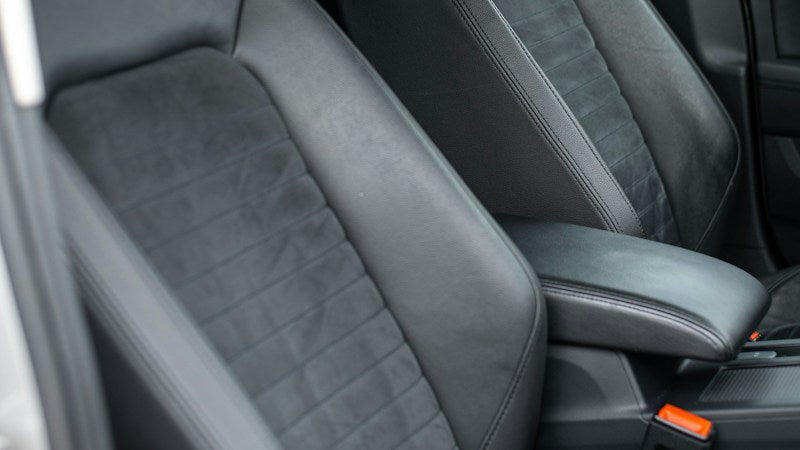
Quick answer: To clean fabric car seats at home, vacuum them thoroughly first, pre-treat stains with a mild upholstery cleaner, agitate gently with a soft brush, then rinse and extract the dirty water instead of just wiping it. Use as little water as possible, and dry the car with the doors or windows open so the foam doesn't stay damp and turn musty in Malaysian humidity. A spot cleaner that sprays and sucks back water, such as the Corvan S7 or the S9, does the rinse-and-extract step far better than a cloth.
Fabric car seats take a lot: teh tarik spills, sambal from takeaway packs, sweat after a hot afternoon in traffic, muddy shoes, and whatever the kids or the dog bring in. Most of it can be cleaned at home in an afternoon. The trick is not the cleaner you buy. It's getting the dirt and the water back out, so the seat dries clean instead of leaving a ring or a damp smell.
What do I need to clean fabric car seats at home?
You don't need a full detailing kit. For most cars, this is enough:
- A vacuum with a crevice tool, for crumbs, sand and hair in the seams.
- A mild upholstery or fabric cleaner, diluted as the label says. A few drops of mild dish soap in water also works for light dirt.
- A soft-bristle brush and a few clean microfibre cloths.
- A way to extract the water: a spot cleaner or wet-and-dry vacuum is ideal. Towels pressed firmly into the fabric are the fallback.
Before you start, check your owner's manual for the seat material and any cleaning advice. Many modern front seats have side airbags or occupant sensors built in, so use the least water you can and never soak the seat.

How do I clean fabric car seats step by step?
- Vacuum everything. Push the seats forward and back to reach the rails, and run the crevice tool along every seam. Loose grit turns into mud once it gets wet.
- Test your cleaner. Try it on a hidden area, such as the back of the seat near the floor, and check for colour change once it dries.
- Pre-treat stains. Spray lightly onto the stain only, not the whole seat. Leave it for a few minutes as the label says.
- Agitate gently. Work the cleaner in with a soft brush in small circles. Scrubbing hard can fuzz the fabric.
- Rinse and extract. Spray a little clean water and vacuum it straight back out with a spot cleaner, and repeat until the water coming back looks clear. This removes the dirt and the leftover cleaner, which otherwise attracts new dirt and can leave a ring.
- Clean the whole panel evenly. If one spot comes out much lighter than the rest, lightly clean the whole panel from seam to seam so it dries evenly.
- Dry it properly. See the drying section below. This is the step most people rush.

How do I remove common car seat stains?
Different stains need different first steps. Blot fresh spills before doing anything else, and don't rub.
| Stain | First step | Then | Avoid |
|---|---|---|---|
| Coffee, tea, soft drinks | Blot, then rinse with cool water | Mild upholstery cleaner, brush, extract | Letting sugary drinks dry, as they turn sticky |
| Oily food and sambal | Scrape off solids, blot the oil | A cleaner made for grease, or dish soap solution; extract and repeat | Spreading it wider with a wet cloth |
| Sweat and body oil (headrests, seat backs) | Vacuum | Mild cleaner, gentle brush, extract | Over-wetting the headrest foam |
| Mud and sand | Let it dry, then vacuum | Treat any mark left with cleaner and extract | Cleaning wet mud, which pushes it deeper |
| Milk, vomit, blood | Remove solids, blot, rinse with cool water | Enzyme cleaner as the label says, then extract | Hot water or steam first, which can set these stains |
If you use any chemical cleaner in a car, keep the doors open for ventilation, never mix products (especially bleach with ammonia or acids), and follow the label. Bleach is not suitable for coloured car fabric.
Can I steam clean fabric car seats?
Usually yes, on fabric, if your owner's manual doesn't say otherwise. Steam helps loosen greasy, sticky dirt and freshens fabric. Keep the nozzle moving, don't hold it on one spot, and extract the moisture afterwards. Two exceptions: don't use steam first on milk, vomit or blood (cool water and an enzyme cleaner come first), and avoid steam on leather or suede-like microfibre unless the car maker says it's fine.
How do I dry car seats fast in humid weather?
In Malaysia, a car closed up with damp seats is how a musty smell starts. Dry it like this:
- Extract as much water as you can. Less water in the foam means faster drying.
- Clean in the morning, in a shaded or covered porch, and keep the doors or windows open for a few hours.
- Run a fan into the car, or start the engine and run the air-conditioner with fresh air for a while if you're with the car.
- Press a dry towel firmly on the seat before you sit on it. If it comes up damp, give it more time.

What about child car seats and pet hair?
Child car seats: follow the child seat maker's manual. Many makers say the harness straps shouldn't be soaked, machine-washed or cleaned with harsh chemicals, because that can weaken them. The fabric cover is often removable and washable as the manual describes.
Pet hair: vacuum slowly against the direction of the fabric, then go over it with a damp rubber glove or a lint roller to lift what's left. For pet accidents, our pet urine smell guide covers the cool-water and enzyme method, which works the same on car fabric.
Spot cleaner S7 or S9 for car seats?
Both Corvan spot cleaners spray water and suck it back out, the step that makes the biggest difference on car seats. Here is how they compare, from Corvan's product listings and comparison chart:
| Corvan Spot Cleaner S7 | Corvan Steam Spot Cleaner S9 | |
|---|---|---|
| Best for (Corvan's comparison chart) | Everyday spills, stains and fabric cleaning | Grease, odour, deep stains and more surfaces |
| Cleaning system | Wash + vacuum | Steam + wash + vacuum |
| Car interiors | Corvan lists it as suitable for different fabric surfaces | Corvan lists car interiors and car seats among its uses |
| Steam | Not available | 100°C |
| Water modes | Not listed | Cool water and hot water |
| Suction | 17.5kPa (Corvan's comparison chart) | 18kPa |
| Clean water tank | 1.6L (Corvan's comparison chart) | 2,000ml |
| Drying | TurboDry quick-dry system | Corvan lists up to 96% moisture removal, for up to 4× faster drying |
| Reach | Extra-long hose and power cable | 4.85m power cord and 1.44m hose (Corvan's spec image) |
| Hose cleaning | Easy hose cleaning tool (Corvan's comparison chart) | Automatic 30-second self-clean |

Spot cleaners plug into the mains, so park close to a power point. If you use detergent in the machine, Corvan's Multi-Surface Spot and Stain Detergent is listed for the S6, S7 and S9, diluted 1:30 with water, or 1:15 for stubborn stains. Corvan advises testing it on a hidden area for colourfastness first.

Our take
For car seats, the order matters more than the product: vacuum, test, pre-treat, brush gently, rinse and extract, then dry with the doors open. Use as little water as you can. If you mainly deal with drink spills, sweat marks and kids' messes, the S7 covers the rinse-and-extract step well. If you also want steam for greasy, sticky dirt, and a cool water mode for milk or vomit, the S9 is the more flexible choice, and Corvan lists car seats among its uses.
Frequently asked questions
How often should I clean fabric car seats?
Vacuum them every few weeks, more often if you carry kids, pets or food. A deeper clean with rinse and extraction every few months, or whenever there's a visible stain or smell, is enough for most cars. Treat spills as soon as you can.
How long do car seats take to dry after cleaning?
It depends on how much water went in and how well it was extracted. With good extraction, open doors and airflow, light cleaning often dries within a few hours. Heavily wetted seats can take much longer, so check the foam with a dry towel before closing up the car.
Can I use baking soda or vinegar on car seats?
Baking soda sprinkled on a dry seat and vacuumed off can help with light odours. Diluted white vinegar is a common home rinse, but test it first and never mix it with bleach. Neither replaces rinsing and extracting the dirt out of the foam.
Is it safe to wet car seats that have airbags?
Light surface cleaning is normal, but avoid soaking the seat, especially the sides of front seats where side airbags often sit. Use as little water as possible, extract it straight away, and check your owner's manual or dealer if you're unsure.
Give your car seats a proper clean
If wiping keeps leaving rings or a damp smell, the dirt and water are still in the foam. Compare the S7 Spot Cleaner and the S9 Steam Spot Cleaner in our Spot Cleaner collection. Not sure which suits you? Ask the Corvan team. We'll help you choose, not just sell.
General information only. Product specifications are taken from Corvan's product listings and Corvan's comparison and spec charts, and can change, so check the product page for the latest details. Where neither states a specification, we have written "Not listed". General cleaning guidance reflects widely published advice. Always follow your product's manual, your car and child seat makers' instructions, and the label of any cleaning product. Last reviewed: 13 November 2026. Spotted an error? Tell us and we'll correct it.


Leave a comment
All comments are moderated before being published.
This site is protected by hCaptcha and the hCaptcha Privacy Policy and Terms of Service apply.