
Quick answer: For a mostly tiled Malaysian home, a wet & dry vacuum is the better choice if you want one machine that picks up dry dirt and washes the floor in a single pass, especially in the kitchen. A vacuum with a mop or steam head suits homes that vacuum daily and only need a light mop on top. A cordless vacuum plus a good flat mop is the cheapest setup and still works well if you don't mind two steps. Corvan lists the W6 Pro, the X8 and the FS32T flat mop for these three approaches.
Most Malaysian homes, from terrace houses to condos, are tiled from the front door to the wet kitchen. Tiles are easy to live with, but they show every footprint, sticky spill and strand of hair. That is why so many people end up asking the same question: should I buy a wet & dry vacuum, or is a vacuum and a mop good enough? This guide explains what each option actually does, where each one falls short, and how to choose.
What is the difference between a wet & dry vacuum and a vacuum mop?
The names sound alike, but the machines work differently:
- Wet & dry vacuum (floor washer). A wet roller spins against the floor while clean water is fed onto it. At the same time, suction pulls the dirty water and loose debris into a separate waste tank. You vacuum and wash in one pass, and the floor is left only slightly damp.
- Vacuum with a mop or steam head. This is a cordless stick vacuum first. For mopping, you switch to a mop head with pads, and some models add steam. It is excellent for dry dust and hair, and the mop head handles light wet cleaning afterwards.
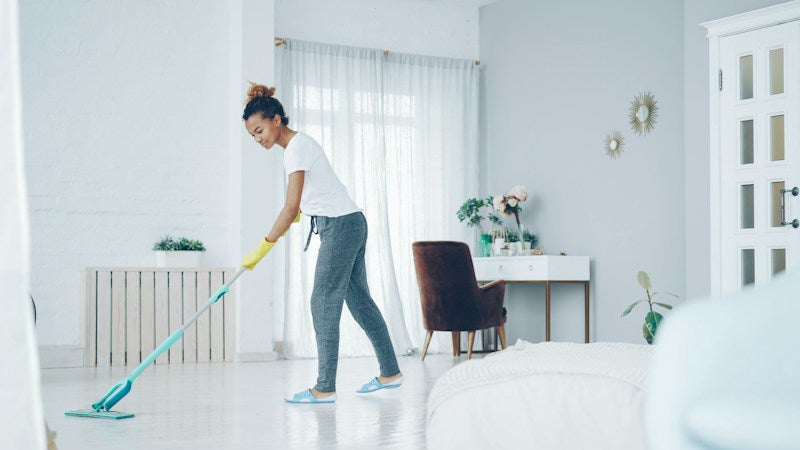
- Cordless vacuum plus a separate mop. The traditional two-step routine: vacuum first, then mop. With a modern flat mop that keeps clean and dirty water apart, the mopping step is much cleaner than the old bucket-and-string mop.

Which cleans tiles better?
For everyday dirt on tiles, a wet & dry vacuum usually gives the cleanest result with the least effort. Because it lifts the dirty water away instead of spreading it around, you are not pushing a thin film of grime from one end of the room to the other. That matters on light-coloured tiles, where a dirty mop leaves a dull, streaky finish.
A vacuum with a mop head does a good job on floors that are already vacuumed and only need a wipe. It is less suited to heavy messes. Corvan's own comparison chart lists the X8 as "not for large wet spills", which is a fair, honest description of what this type of machine is for.
A flat mop can still get tiles very clean. The difference is time and effort: you need to vacuum first, rinse the pad often and change the water when it gets dirty.
What about grout lines?
No floor machine fully replaces a brush on deep or stained grout. Rollers and mop pads clean the tile surface and the top of the grout line well, but dirt that has settled deep into textured or wide grout usually needs scrubbing or steam. If grout is your main problem, treat it as a separate job, perhaps once a month or before festive cleaning, rather than expecting a floor cleaner to solve it.
How do the Corvan options compare?
The figures below come from Corvan's product listings and, where noted, Corvan's own comparison charts. Suction for the W6 Pro is listed in Pa and for the X8 in AW. These are different units, so you cannot compare the two numbers directly.
| W6 Pro | X8 | FS32T | |
|---|---|---|---|
| Type | Cordless wet & dry vacuum | Cordless vacuum with mop, steam and UV-C head, plus self-emptying station | Manual flat mop with clean and dirty water tanks |
| Suction | 20,000Pa | 250AW (comparison chart) | Not applicable |
| Runtime | Up to 40 minutes (Eco), up to 28 minutes (Max) | Up to 60 minutes | Not applicable |
| Suggested coverage | Up to 4,000 sq ft per charge | Large homes, about 4,000 sq ft (comparison chart) | Not listed |
| Water tanks | 550ml clean, 580ml waste | Not listed | 3.5L clean, 3.5L waste |
| Weight | 1kg in hand | 1.3kg in hand; 2.8kg full (comparison chart) | Not listed |
| Low-furniture reach | Lies flat, 12cm clearance | Not listed | 4.8cm mop height |
| Self-care | One-touch self-cleaning, hot-air drying | Station empties dust into a sealed 1.5L bag | Push-pull rinsing and wringing |
| Best for | Tiled homes with frequent kitchen spills, pets or kids | Daily vacuuming with lighter mopping and steam | Budget, small homes, or a second floor |
Is a wet & dry vacuum worth it in a Malaysian home?
It is worth it if wet messes are a regular part of your week. Think sticky drink spills, a wet kitchen floor after cooking, muddy footprints from the porch during the monsoon season, or pets and young children. In those homes, being able to vacuum and wash in one pass saves real time.
Corvan lists the W6 Pro with a dual-tank system that keeps clean and dirty water apart, 16N of downward pressure for stuck-on stains, Tri-edgeClean for cleaning along walls, and a lay-flat design that reaches under beds and sofas with 12cm of clearance.

It is less worth it if your floors are mostly rugs or carpet. Wet & dry floor washers are built for sealed hard floors, so you will still need a regular vacuum for rugs, sofas, mattresses and car seats.
The humidity problem: will it smell?
This is the most common complaint about wet floor cleaners anywhere, and our humid climate makes it worse. A damp roller and a dirty water tank left closed up will start to smell within a day or two. The fix is simple but non-negotiable: empty and rinse the dirty water tank after every use, and make sure the roller dries properly. Corvan lists the W6 Pro with one-touch self-cleaning and hot-air self-drying for exactly this reason. Even so, empty the waste tank every time.

When is a vacuum and a separate mop the smarter choice?
If you already own a good cordless vacuum, adding a flat mop is the lowest-cost way to clean tiles properly. It also makes sense for small condos, for a second floor in a double-storey house, or for anyone who prefers to control how wet the floor gets.
Corvan lists the FS32T with an ActiveWash system that uses a push-pull motion to rinse the pad with clean water and scrape dirty water into a separate tank, so you never dip the mop back into dirty water. It is listed for wood, tile, laminate and vinyl floors.

Our take
If your home is mostly tiled and the kitchen sees daily spills, the W6 Pro is the most practical single machine: Corvan lists 20,000Pa suction, separate clean and dirty water tanks, self-cleaning with hot-air drying and up to 40 minutes of runtime. If your priority is everyday dust and hair, with steam mopping on top, the X8 covers more jobs beyond the floor, with 5 attachments listed on Corvan's comparison chart, but it is not designed for large wet spills. On a tight budget, or if you already own a cordless vacuum, the FS32T gets tiles properly clean with a little more effort. Pick the one that matches the mess you actually deal with, not the longest feature list.
Frequently asked questions
Can a wet & dry vacuum replace my normal vacuum?
On hard floors, mostly yes, because it picks up dry debris and washes in the same pass. It cannot clean carpets, rugs, sofas or mattresses, so most homes still keep a regular cordless vacuum for those.
Will a wet & dry vacuum leave my tiles streaky?
Usually less than a traditional mop, because it lifts the dirty water away. Streaks are most often caused by too much floor cleaner, so use only the amount the manufacturer recommends.
How do I stop a wet floor cleaner from smelling in humid weather?
Empty and rinse the dirty water tank after every use, and let the roller dry completely before storing the machine. Self-cleaning and hot-air drying help, but they do not replace emptying the waste tank.
Is steam mopping safe for all tiles?
Glazed ceramic and porcelain tiles generally handle steam well. For natural stone such as marble, or for unsealed grout, check with your tile supplier first.
Find the right floor cleaner for your home
Compare the W6 Pro and X8 in our Vacuums collection, or browse the FS32T and other mops in Cleaning Appliances. Not sure which suits your floors? Tell the Corvan team your floor type, home size and how often you deal with spills, and we'll help you choose.
General information only. Product specifications are taken from Corvan's product listings and Corvan's comparison charts, and can change, so check the product page for the latest details. Where neither states a specification, we have written "Not listed". General cleaning guidance reflects common practice for Malaysian homes. Always follow your product's manual, your floor or tile supplier's care instructions and the label of any cleaning product. Last reviewed: 10 November 2026. Spotted an error? Tell us and we'll correct it.




Leave a comment
All comments are moderated before being published.
This site is protected by hCaptcha and the hCaptcha Privacy Policy and Terms of Service apply.